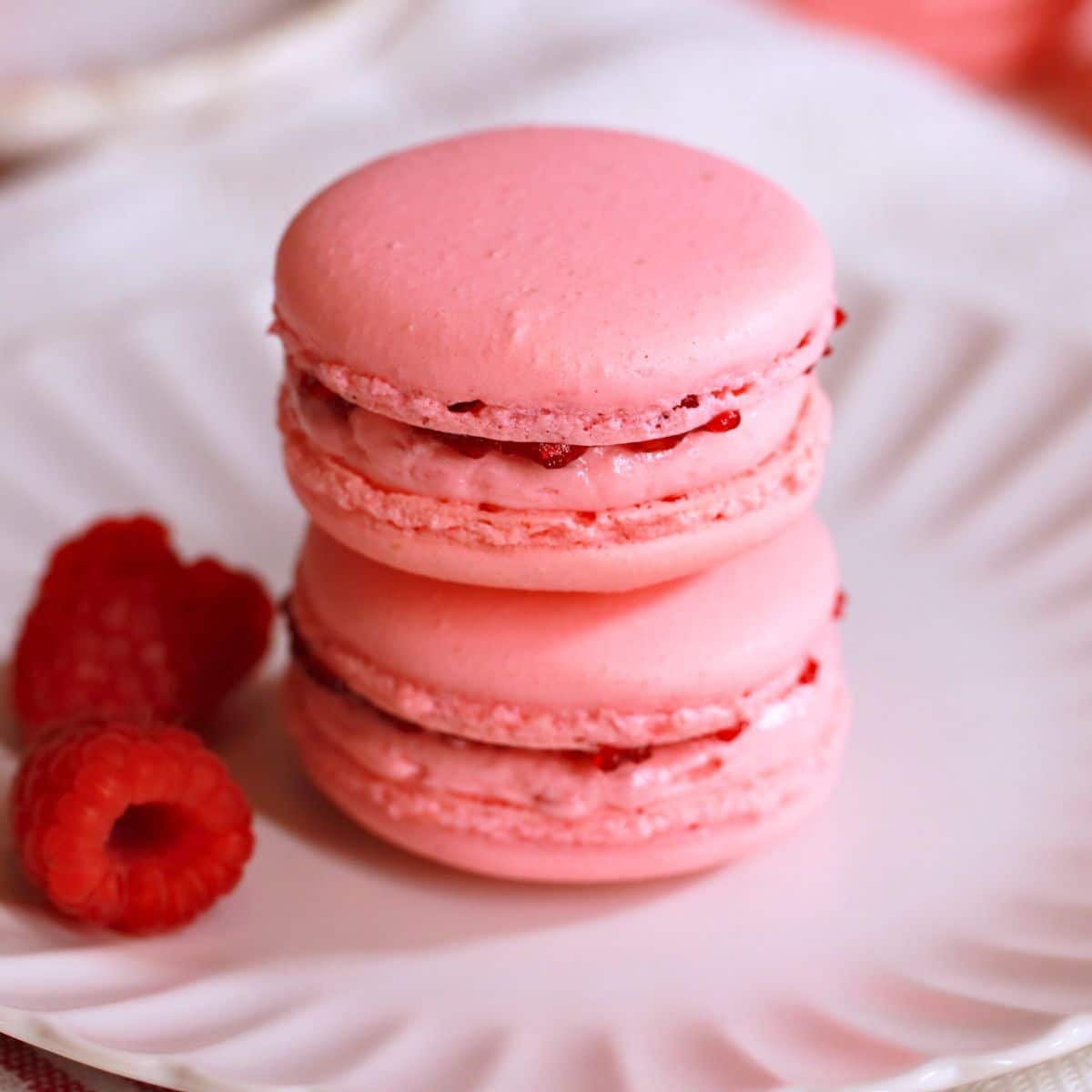
The delicate, vibrant world of French patisserie offers few delights as captivating as the macaron. Among its myriad flavors, raspberry macarons stand out as a true masterpiece, balancing the ethereal sweetness of the almond meringue shell with the bright, tangy burst of fresh raspberries. These exquisite confections are more than just a dessert; they are a miniature work of art, a symphony of textures and flavors that enchants both the eye and the palate. From their perfectly ruffled 'feet' to their smooth, often vibrantly colored caps and the creamy, fruity filling nestled within, raspberry macarons embody elegance and gourmet indulgence. This article will guide you through the allure, the intricate process, and the secrets to perfecting these irresistible treats, ensuring your journey into macaron making is both rewarding and delicious.
The Irresistible Allure of Raspberry Macarons
What makes raspberry macarons so universally beloved? The answer lies in their exquisite balance and sensory appeal. Raspberries, with their natural tartness and fragrant sweetness, offer a perfect counterpoint to the sugary almond shells. This harmonious contrast prevents the macaron from becoming overly sweet, leaving a refreshing, lingering fruit flavor. Visually, raspberry often inspires stunning shades of pink or red, making these macarons incredibly appealing and a delightful addition to any dessert spread, afternoon tea, or special occasion.
Beyond the flavor, the experience of biting into a raspberry macaron is a multi-sensory delight. The initial delicate crispness of the shell gives way to a soft, chewy interior, which then melts into the luscious, often creamy or jammy raspberry filling. This interplay of textures—crisp, chewy, and smooth—is a hallmark of a well-made macaron and is particularly pronounced when filled with a perfectly prepared raspberry creation.
Furthermore, raspberries lend themselves beautifully to various preparations, allowing for a diverse range of raspberry macaron fillings. Whether you prefer a rich raspberry buttercream, a tangy raspberry curd, or a simple, vibrant raspberry jam, the versatility of this fruit ensures there's a raspberry macaron for every preference. This adaptability also allows bakers to get creative, perhaps adding a hint of rosewater or a touch of dark chocolate to elevate the raspberry flavor even further, demonstrating why raspberry remains a perennial favorite in the macaron world.
Mastering the Macaron Shell: A Foundation for Raspberry Perfection
Before you can infuse your macarons with the delightful taste of raspberry, you must first master the art of the macaron shell. These delicate almond meringue cookies form the foundation of your raspberry macarons, and their perfection is paramount. A truly great macaron shell boasts a smooth, uniform top, distinct "feet" (the ruffled edge at the base), and a slightly crisp exterior with a chewy, airy interior. Achieving this requires precision, patience, and a good understanding of a few key techniques.
Choosing Your Meringue Method
There are two primary methods for making macaron shells: the French method and the Italian method. Both have their proponents, and both can yield beautiful results for raspberry macarons:
- French Meringue: This is often considered the simpler method, where granulated sugar is gradually whipped into egg whites until stiff, glossy peaks form. The almond flour and powdered sugar mixture (tpt) are then gently folded into this meringue. French meringue is more delicate and can be less forgiving, but it often produces a lighter shell.
- Italian Meringue: This method involves pouring hot sugar syrup into whipping egg whites, creating a very stable, glossy meringue. This stability makes it more robust and often easier to achieve consistent results, particularly for beginners or in humid environments. The tpt is then folded into this meringue. While slightly more involved due to the syrup, it's often preferred for its reliability.
Whichever method you choose, consistency is key. Ensure your egg whites are at room temperature, and all your dry ingredients are finely sifted to avoid lumps.
Achieving the Perfect Macaronage
Macaronage is perhaps the most critical step in macaron making. This is the process of folding the dry ingredients into the meringue. The goal is to deflate the meringue just enough to create a batter that flows slowly and steadily, often described as having a "lava-like" consistency, or forming a "ribbon" when lifted with a spatula. Under-mixed macaronage will result in lumpy shells with no feet, while over-mixed macaronage will produce flat, oily, or brittle shells.
Practice makes perfect with macaronage. It's often better to under-mix slightly and then check the consistency, folding a few more times if necessary. You'll know it's ready when you can pipe a dollop of batter, and any peak gently subsides back into the mass within about 10-20 seconds.
Piping and Resting for Success
Once your batter is ready, it's time to pipe! Use a round piping tip and a macaron template (or draw circles on parchment paper) to ensure uniform sizes. Pipe vertically, applying even pressure, and finish with a slight flick to avoid tails. After piping, firmly tap your baking sheets against your counter several times to release any air bubbles. This step is crucial for preventing cracked shells.
Finally, allow your piped shells to rest at room temperature. This "drying" period is essential for forming a delicate skin on the surface. When you can gently touch a shell without any batter sticking to your finger, they are ready to bake. This skin is what helps the macaron 'feet' form by forcing the expanding air and moisture to escape from the bottom rather than cracking the top. The resting time can vary greatly depending on humidity, from 30 minutes to several hours. For more in-depth guidance on perfecting your shells, check out raspberry macarons - Article 2.
Crafting the Ideal Raspberry Macaron Filling
The true heart of your raspberry macarons lies in their filling. This is where the vibrant, tangy, and sweet essence of raspberry comes to life, complementing the delicate shells. There are several popular and delicious options for raspberry fillings, each offering a unique texture and flavor profile.
Raspberry Buttercream: Classic & Creamy
A raspberry buttercream is arguably the most common and versatile filling for raspberry macarons. It offers a smooth, creamy texture that pairs beautifully with the chewy shells. To achieve a rich raspberry flavor without adding too much moisture (which can soften the shells prematurely), consider using freeze-dried raspberry powder. This concentrates the flavor intensely. Alternatively, a reduced raspberry purée (strained to remove seeds) can be incorporated into a Swiss or Italian meringue buttercream for a fresher, lighter taste. Ensure the purée is cooled completely before adding to prevent the buttercream from splitting.
Zesty Raspberry Curd: Tangy & Bright
For those who love a more pronounced tang, a raspberry curd makes an exceptional filling. Its bright, zesty flavor cuts through the sweetness of the macaron shells wonderfully. Raspberry curd is typically made with egg yolks, sugar, butter, and raspberry purée, cooked until thick and luscious. It provides a softer, more fluid filling compared to buttercream, so it's often piped around the edges of the macaron with a ring of buttercream to prevent it from seeping out. This combination of textures and flavors is absolutely divine in a raspberry macaron.
Simple Raspberry Jam: Fruity & Pure
Sometimes, simplicity is key. A high-quality raspberry jam or a homemade raspberry compote can serve as a straightforward yet incredibly delicious filling. Choose a jam that isn't overly sweet and has a good balance of fruit and tartness. If making your own compote, reduce it sufficiently to thicken it, ensuring it doesn't make your macarons soggy. You can even combine jam with a thin layer of white chocolate ganache or a plain vanilla buttercream to add complexity and stability. The pure fruit flavor of a good jam highlights the raspberry beautifully.
Pairing Flavors with Raspberry
While raspberry stands strong on its own, it also harmonizes well with other flavors. Consider adding a touch of lemon zest to your raspberry filling for an extra burst of citrus, or a hint of rosewater for a floral note. For a more decadent treat, a thin layer of dark or white chocolate ganache can be piped around the raspberry filling, creating a two-toned flavor profile that is both elegant and delicious. To explore more advanced filling techniques and flavor pairings, see raspberry macarons - Article 3.
Tips for Troubleshooting and Perfecting Your Raspberry Macarons
The journey to perfect raspberry macarons can have its challenges, but understanding common issues and how to resolve them is key to success. Don't be discouraged by imperfections; every batch is a learning opportunity.
Preventing Hollow Shells
Hollow shells are a frequent frustration for macaron makers. They often occur due to under-mixed batter, incorrect oven temperature, or insufficient resting time. Ensure your macaronage is just right – not too thick, not too runny. Experiment with your oven temperature; many ovens run hot or cold, so an oven thermometer is invaluable. Baking at too high a temperature too quickly can cause the shell to rise too fast and create a void. Finally, ensure the shells have formed a good skin during the resting phase; this helps the interior structure develop correctly.
Avoiding Cracked Shells
Cracked shells are usually a sign of insufficient resting time (no skin formation), trapped air bubbles, or an oven that's too hot. Always tap your baking trays firmly after piping to release air. Ensure your shells have fully rested and are dry to the touch before baking. If cracking persists, try reducing your oven temperature slightly or baking for a shorter initial period before rotating.
Achieving Vibrant Raspberry Color
To ensure your raspberry macarons look as good as they taste, achieving a vibrant shell color is important. Use gel or powdered food coloring, as liquid coloring can affect the consistency of your batter. Add the coloring during the meringue stage for the French method, or after the meringue is formed for the Italian method, before folding in the dry ingredients. Remember that colors can deepen slightly during baking.
Storage and Maturation
Once assembled with their delicious raspberry filling, macarons actually improve with age. This process, known as "maturation," allows the moisture from the filling to slightly soften the shells, melding the flavors and creating that signature chewy texture. Store your assembled raspberry macarons in an airtight container in the refrigerator for at least 24 hours before serving. They will keep well for 3-5 days in the fridge and can also be frozen for up to a month (thaw in the refrigerator). This maturation period is crucial for the raspberry flavor to fully infuse the delicate shells.
Patience, practice, and a willingness to learn from each batch are your best tools for creating consistently perfect raspberry macarons. Don't be afraid to experiment with slight adjustments to your recipe or technique to find what works best with your ingredients and environment.
Conclusion
The journey of creating raspberry macarons is a testament to the art and science of baking. From mastering the delicate macaron shells to crafting the perfect balance of sweet and tart in the raspberry filling, each step contributes to a truly exquisite confection. These beautiful treats are more than just a dessert; they are a celebration of flavor, texture, and visual appeal, offering a gourmet experience in every bite. Whether you're a seasoned baker or embarking on your first macaron adventure, the allure of raspberry macarons provides an inspiring and rewarding challenge. With practice, precision, and a passion for patisserie, you too can create these stunning French delicacies that will delight friends, family, and yourself. So, gather your ingredients, embrace the process, and prepare to indulge in the irresistible charm of homemade raspberry macarons.
